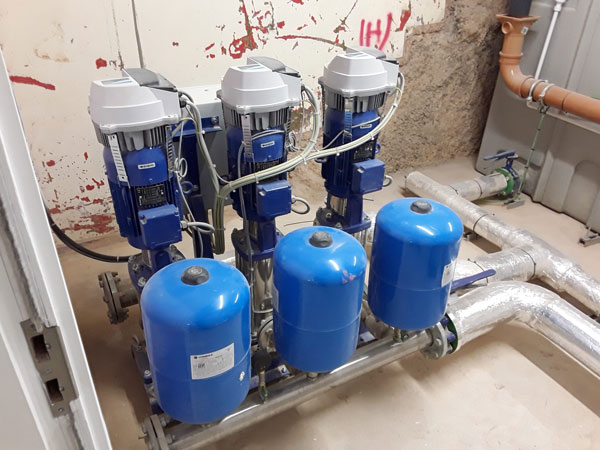
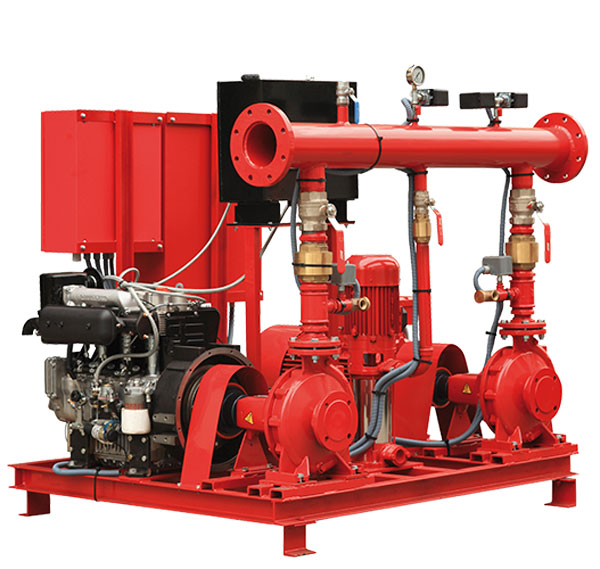
Booster pumps are devices whose main function is to increase the pressure of liquids when the existing pressure is not sufficient. These equipment are widely used in various fields such as water supply, industrial systems, irrigation, and especially fire protection. For example, in fire-fighting systems, these devices provide the required pressure for the operation of sprinklers, standpipes, and hydrants, and are compatible with international standards such as NFPA 20. This article introduces the operation, types, applications, selection criteria, and maintenance tips of booster pumps.
Booster pumps receive low-pressure liquids from a supply source and increase their pressure before transferring them to the target system. This process is carried out using an impeller or piston, which transfers the required energy to the fluid to raise its pressure. The four main factors in the operation of these pumps are:
Booster pumps are classified into the following types based on their mechanism and application:
Fire protection:
• Providing water pressure for sprinklers and fire-fighting equipment.
• Used in high-rise buildings, warehouses, and industrial facilities.
Domestic water supply:
• Increasing water pressure in residential buildings and hotels.
• Suitable for systems where municipal network pressure is insufficient.
Industrial and production processes:
• Transferring chemicals or supplying cooling water in production lines.
Agricultural irrigation:
• Increasing pressure for drip irrigation or sprinkler systems.
HVAC systems:
• Ensuring effective water circulation in heating and cooling systems.
System requirements:
• Accurate calculation of required pressure and flow rate.
• Considering NFPA 20 requirements for fire protection systems.
Power source:
• Selecting electric or diesel motors based on environmental conditions and availability.
Efficiency:
• Preferably booster pumps equipped with VFDs for energy savings.
Construction materials:
• Using corrosion-resistant materials for systems containing corrosive fluids.
To increase service life and improve performance, regular maintenance is essential:
• Periodic inspection: Checking components such as impellers and seals.
• Cleaning: Removing deposits from filters and inlets.
• Performance testing: Testing flow and pressure according to standards.
• Cavitation prevention: Adjusting inlet pressure to prevent pump damage.
Modern booster pumps, by utilizing advanced technologies, provide better performance: