UL Standards
UL Standards refer to a set of safety and performance standards developed by Underwriters Laboratories (UL), an independent global safety certification organization. These standards are widely used in the United States and many other countries to evaluate the safety, reliability, and performance of electrical, mechanical, and fire protection equipment.
In the context of fire protection and pumping systems, UL standards play a critical role in ensuring that equipment meets minimum safety requirements before being approved for use in critical applications.
Purpose of UL Standards
The main purpose of UL standards is to:
Ensure product safety and reliability.
Reduce risks of fire, electrical failure, and mechanical hazards.
Provide consistent testing and certification criteria.
Support compliance with building and fire codes.
Products that meet UL standards are typically labeled as “UL Listed”, meaning they have been tested and certified for safety under defined conditions.
UL Standards in Fire Protection Systems
In fire protection engineering, UL standards are commonly applied to:
Fire pumps and pump controllers.
Electric motors used in fire protection systems.
Control panels and electrical components.
Alarm and detection systems.
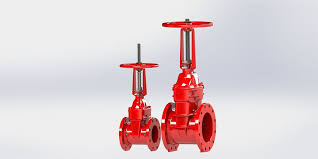
Valves and pressure control devices.
These standards ensure that all components of a fire protection system can operate reliably under emergency conditions.
UL Listing vs NFPA Standards
It is important to understand the difference between UL and NFPA:
NFPA standards (such as NFPA 20) define how systems should be designed and installed.
UL standards define how individual components are tested and certified for safety and performance.
In practice, both are used together:
NFPA ensures correct system design and installation.
UL ensures the equipment used in the system is safe and reliable.
Importance of UL Certification
UL certification provides confidence that equipment:
Has been tested under rigorous laboratory conditions.
Meets minimum safety and performance requirements.
Is suitable for use in critical fire protection applications.
Complies with widely recognized international safety benchmarks.
Because of this, UL-listed products are often required in commercial, industrial, and high-risk facilities.
Scope and Application of UL Standards in Fire Pumps
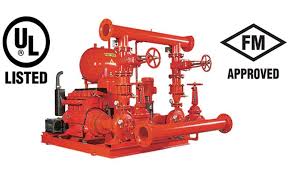
UL standards play a particularly important role in fire pump systems, especially through standards such as UL 448, which covers centrifugal stationary fire pumps designed for fire protection service.
This standard ensures that fire pumps meet strict requirements for:
Mechanical strength and durability.
Hydraulic performance under rated and overload conditions.
Reliability during emergency operation.
Safe interaction with controllers and power systems.
By defining these performance and safety criteria, UL 448 ensures that fire pumps can operate consistently and effectively when required most.
Role of UL Standards in System Reliability
Beyond fire pumps, UL standards contribute to the overall reliability of fire protection systems by ensuring that all components function as an integrated and tested system. This reduces the risk of failure due to incompatible or non-certified equipment and increases confidence in system performance during critical fire events.
UL Standard Development Process:
UL standards are developed through a consensus-based process, with collaboration among various stakeholders. The key stages of this process include:
These processes ensure that UL standards remain up to date and reliable.
UL 448 Standards and Its Role in Fire Pumps:
UL 448 is one of the key standards in the field of fire pumps, which defines the requirements for the design, manufacturing, and testing of this equipment. This standard ensures that pumps operate reliably in emergency conditions and meet critical needs.
Some of the key requirements of this standard include:
Applications and Importance of UL Standards
UL standards are applied across various industries and play a key role in ensuring the safety and performance of systems.
- ## Fire Protection: Fire pumps certified under **UL 448** ensure the performance of fire suppression systems in high-rise buildings and industrial facilities.
- ## Electrical Systems: Standards such as **UL 508A** ensure the safe operation of industrial control panels.
- Building Materials: Standards such as **UL 723** evaluate the fire resistance of building materials.
- Advanced Technology: Standards have also been developed for advanced batteries and modern equipment.
Challenges and Opportunities:
Despite all their advantages, UL standards also present certain challenges:
Costs: The certification process can be expensive for small manufacturers.
Continuous updates: Manufacturers must constantly keep up with changes in standards.
Counterfeit products: Products without valid certification can compromise safety.
UL standards, such as UL 448, not only ensure the safety and proper performance of equipment but also play an important role in supporting innovation and regulatory compliance. These standards, by setting strict criteria, protect lives and property and give manufacturers confidence that their products are reliable. In the field of fire protection, UL 448 remains a critical standard for ensuring the performance of fire pumps.