
Archimedes’ Screw
Archimedes (c. 287–212 BC)
Birth: Around 287 BC in Syracuse, on the island of Sicily, then a Greek colony.
Death: Around 212 BC, during the Roman siege of Syracuse.
Archimedes was the son of an astronomer named Phidias. From an early age, he developed a strong interest in mathematics and mechanics, which later led him to become one of the greatest scientists and engineers of the ancient world.
Education and Travels
Archimedes is believed to have studied in Alexandria, Egypt, where he worked alongside renowned scholars and the followers of Euclid. This experience played a key role in shaping his expertise in both theoretical mathematics and practical engineering.
Major Achievements and Inventions
1. Archimedean Screw
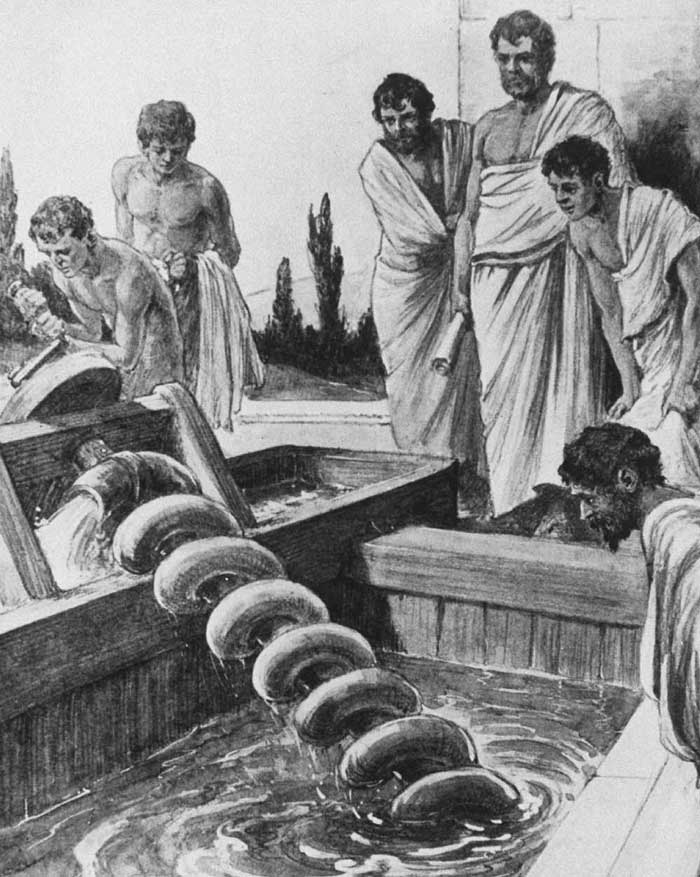
The Archimedean Screw is one of Archimedes’ most famous inventions, designed to lift water from a lower level to a higher one. It consists of a helical screw enclosed within a cylindrical tube. As the screw rotates, water becomes trapped between the blades and is carried upward along the spiral.
This invention is still used today in irrigation systems, drainage applications, wastewater treatment plants, and low-head hydroelectric power generation, demonstrating the enduring value of Archimedes’ engineering innovation.
2. Principle of Buoyancy (Archimedes’ Principle)
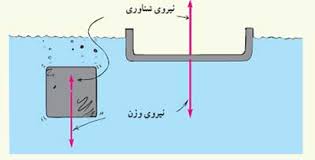
Archimedes discovered that a body wholly or partially immersed in a fluid experiences an upward buoyant force equal to the weight of the fluid it displaces. This fundamental principle remains the cornerstone of naval architecture, marine engineering, and many other fields involving fluid mechanics.
3. Levers and Pulleys
Archimedes is famously credited with the statement:
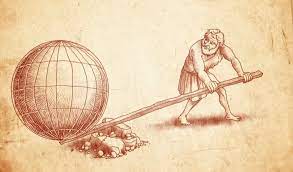
“Give me a place to stand, and I will move the Earth.”
This quote reflects his profound understanding of the principle of the lever. He designed mechanical systems using levers and pulleys that enabled the movement of extremely heavy objects with relatively little effort. His work laid the foundation for the development of simple machines and continues to influence modern mechanical engineering.
4. Military Engineering
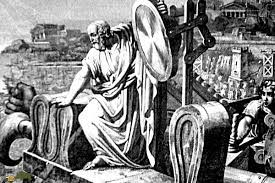
During the Roman siege of Syracuse, Archimedes designed a variety of defensive war machines, including powerful catapults for launching large stones and mechanical devices capable of damaging or overturning enemy ships.
A well-known legend also claims that he used a series of concave mirrors to concentrate sunlight and set Roman ships on fire. While this story has become one of the most famous accounts of Archimedes’ ingenuity, many modern historians and researchers question its historical accuracy due to the lack of definitive evidence.
5. Mathematics and Geometry
Archimedes developed groundbreaking methods for calculating the area, surface area, and volume of geometric figures. He is widely regarded as a pioneer of the method of infinitesimals, an approach that laid the conceptual foundation for the later development of calculus.
He also produced one of the most accurate approximations of the mathematical constant π (pi) available in the ancient world.
Death of Archimedes
In 212 BC, Syracuse was captured by the Romans under the command of Marcus Claudius Marcellus. Although Marcellus had reportedly ordered that Archimedes should not be harmed because of his great admiration for the scientist, a Roman soldier who did not recognize him killed him while he was deeply absorbed in mathematical calculations or drawing geometric figures.
This event is remembered as one of history’s most tragic losses of a brilliant scientific mind.
Legacy
Archimedes was a remarkable combination of a theoretical mathematician and a practical engineer. His works were translated and studied extensively by Islamic scholars during the Middle Ages, including Ibn al-Haytham and Al-Biruni, helping preserve and expand his scientific legacy.
His discoveries later inspired many Renaissance scientists, including Galileo Galilei and René Descartes.
Today, Archimedes is recognized as one of the greatest minds in history, whose pioneering work bridged the gap between science and engineering and continues to be taught in universities around the world.
The Archimedean Screw
It is widely believed that Archimedes developed the Archimedean Screw during his visit to Egypt, where he observed the need to lift water from the Nile River to irrigate higher farmland. Although some historians suggest that primitive versions of screw pumps may have existed earlier in Egypt or Babylon, Archimedes is credited with refining, standardizing, and mathematically developing the device into the efficient water-lifting mechanism that bears his name today.
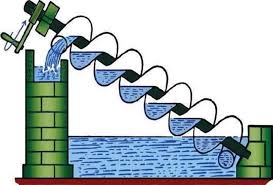
The Archimedean Screw
Design and Operating Principle
The Archimedean Screw consists of a helical screw enclosed within a cylindrical or partially open casing and installed at an angle to the horizontal. The lower end of the screw is submerged in water. As the shaft rotates—whether powered by human effort, animals, wind, or, in modern times, electric motors—the water becomes trapped between the helical blades. With each rotation, the water is lifted step by step until it reaches the upper end of the screw, where it is discharged.
Historical Applications
Ancient Greece and Egypt: Used to lift water from rivers into irrigation canals.
Ancient Rome: Employed to remove water from mines and underground excavations.
Medieval Europe: Installed alongside watermills and windmills to pump water for agricultural irrigation and to drain marshlands.
The Netherlands (16th–17th Centuries): Played a crucial role in reclaiming low-lying land by draining water and converting flooded areas into productive farmland.
Evolution Through Time
Initially operated manually or by animal power.
During the Middle Ages, waterwheels were commonly used to drive the screw.
The Industrial Revolution introduced steam engines, which were later replaced by diesel and electric motors.
In the 20th century, engineers recognized that the Archimedean Screw could also operate in reverse as a hydroelectric turbine, generating electricity from flowing water.
Modern Applications
Water Treatment Plants: Pumping large volumes of water at low heads.
Agriculture: Irrigation of canals, fields, and rice paddies.
Micro-Hydropower Generation: Water flows from the top of the screw, causing it to rotate and drive a generator to produce electricity. This technology is environmentally friendly and well suited for small rivers and low-head hydroelectric projects.
Advantages
Capable of pumping water containing debris, suspended solids, or wastewater, thanks to its open and simple blade design.
Requires minimal maintenance.
Offers relatively high efficiency at low heads, typically between 60% and 80%.
Features a durable, reliable, and mechanically simple construction with a long service life.
Historical Significance
The Archimedean Screw is a remarkable example of the practicality and ingenuity of ancient engineering. Invented more than 2,200 years ago, it continues to serve modern society in agricultural irrigation, water management, and renewable energy applications.
Many engineers regard the Archimedean Screw as one of the earliest industrial pumps in human history, demonstrating how a simple yet innovative design has remained relevant for over two millennia.